The Nearest You Can Be to Allah – Sujood in Salah
Narrated Abu Huraira:
Allah’s Messenger (ﷺ) said:
“أَقْرَبُ مَا يَكُونُ الْعَبْدُ مِنْ رَبِّهِ وَهُوَ سَاجِدٌ، فَأَكْثِرُوا الدُّعَاءَ”
“The closest a servant comes to his Lord is while he is in prostration (sujood), so increase supplication (du’a) therein.”
(Sahih Muslim 482)
The Sacred Position of Sujood in Prayer
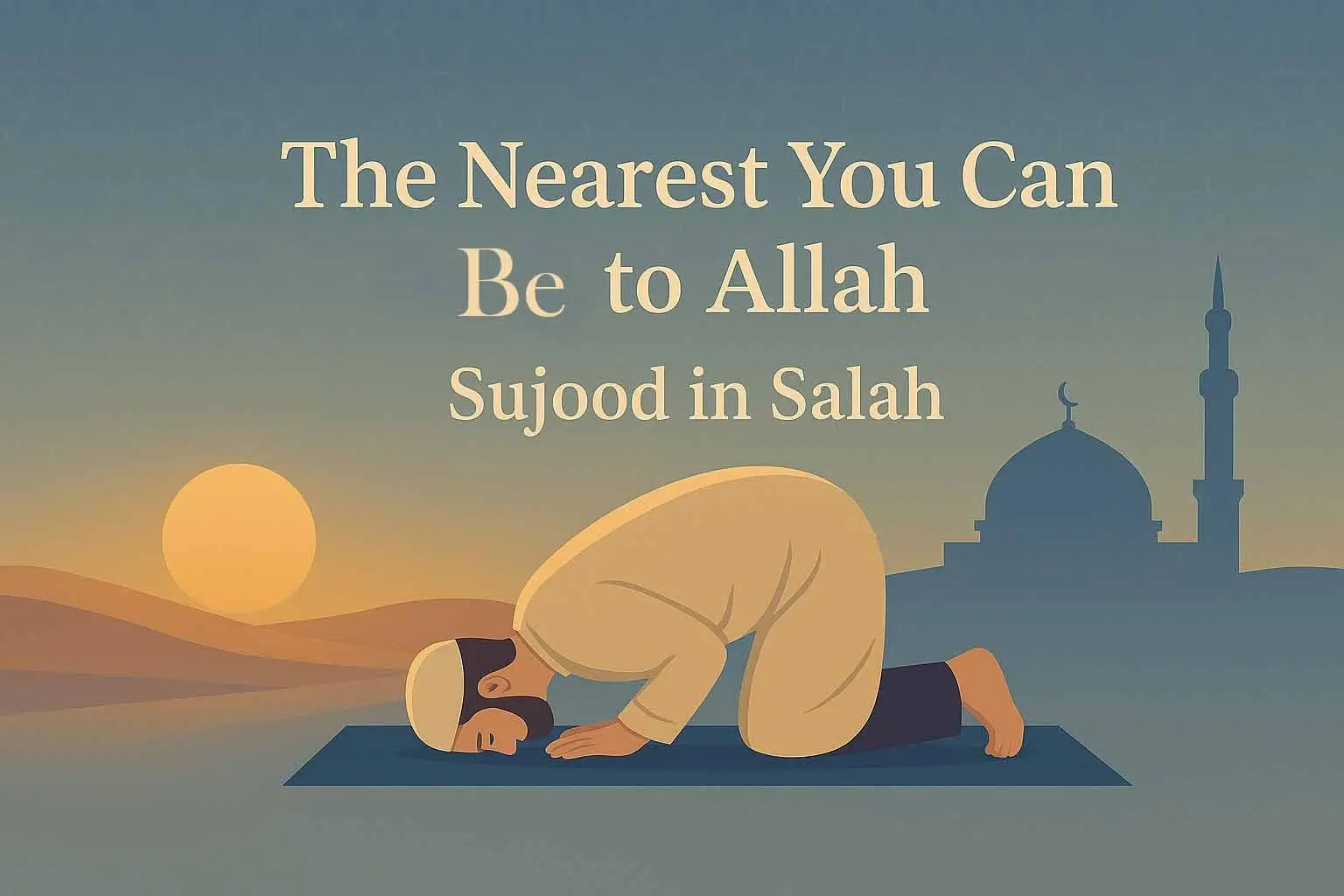
In every unit of daily prayer, there is a defining moment where the physical posture of the believer perfectly mirrors the internal devotion of the soul. That posture is sujood—the prostration. Lowering your forehead, hands, knees, and toes to the ground represents the ultimate physical expression of humility and submission to Allah. In this exact moment, as physical stature is lowered to the earth, the spiritual rank of the believer is elevated. Achieving this depth of worship requires both physical readiness and spiritual grounding, starting with proper preparation like cleanliness in Islam.
Scholarly Context and Spiritual Realities of Prostration
Islamic scholars emphasize that prostration represents the core of ‘ubudiyyah (true servitude to God). By placing the most noble part of the human body—the forehead—upon the ground, the worshipper strips away pride, worldly distraction, and self-importance:
- Direct Auditory and Spiritual Connection: The Prophet ﷺ instructed believers to increase their supplications during prostration because it is a station where prayers are readily answered and divine mercy descends.
- Forgiveness of Sins: Authentic narrations highlight that when a servant stands to pray, their sins are placed upon their head and shoulders; each time they bow and prostrate, those sins fall away.
- Building Inner Calm and Humility: Beyond the physical discipline, resting in prostration relieves internal stress, quietens the mind, and centers the heart purely on divine presence.
Practical Steps to Deepen Your Sujood
Experiencing true tranquility (tuma’ninah) in prostration requires intentional practice rather than rushing through positions. Consider incorporating these simple habits into your daily routine:
- Avoid Rushing the Posture: Ensure that all seven limbs firmly touch the ground before beginning your supplications, allowing your spine to settle completely.
- Pour Out Personal Du’a: While obligatory prayers follow prescribed Arabic glorifications, use voluntary prayers (such as Sunnah or Tahajjud) to speak directly from the heart during prostration.
- Maintain Consistency in Worship: Track your daily prayers and voluntary night worship using practical tools like a Prayer Tracker to build a structured, regular habit of extended prostration.
Bringing Mindful Submission to Daily Worship
Prostration reminds us of our earthly origins and our ultimate return to the Creator. When you lower yourself to the prayer mat today, pause for a moment to feel the weight and honor of the gesture. Allow your prostration to become a peaceful retreat from the distractions of the world—a quiet space where the heart whispers directly to its Lord.
“Prostrate and draw near [to Allah].”
(Qur’an 96:19)