Remove Harm from the Path – A Daily Sunnah of Consideration
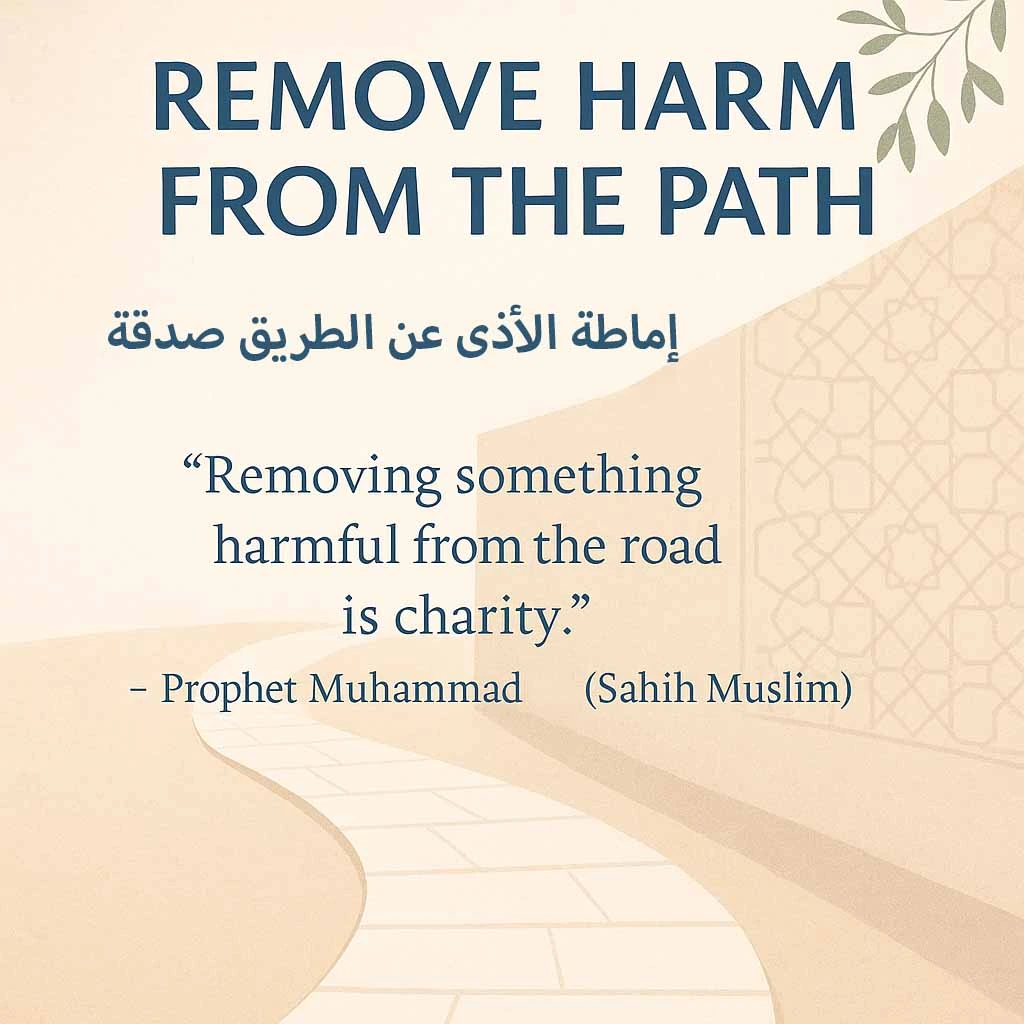
«إِمَاطَةُ الأَذَى عَنِ الطَّرِيقِ صَدَقَةٌ»
“Removing something harmful from the road is a charity.”
— Sahih Muslim (Book 12, Hadith 70)
In our daily hustle, we often measure good deeds by large acts of worship or financial donations. However, Islam places extraordinary value on quiet, everyday acts of consideration that make life safer and easier for others. One of the most accessible yet rewarding practices in the Sunnah is simply clearing an obstacle from a path—a action so fundamental that the Prophet Muhammad ﷺ identified it as an integral branch of faith (iman).
Remove Harm from the Path
Whether it is moving a sharp piece of glass, a fallen branch, loose gravel, or a misplaced obstacle, clearing the way reflects a heart grounded in empathy and social responsibility. Islam views every public space as a shared trust, where even the smallest effort to prevent hardship for a stranger is recognized and rewarded as an act of voluntary charity (sadaqah).
Practical Application:
The next time you walk through a hallway, neighborhood street, or public building and spot a hazard, pause for a brief second to remove it. Make the conscious intention (niyyah) that you are doing this solely for the sake of Allah to protect His creation. You may never meet the person who benefited from your quiet consideration, but the reward remains fully recorded with your Creator.
A Sunnah Act of Everyday Impact
Removing harm is not limited to physical objects on a walkway. It represents a broader mindset of safety, consideration, and active civic duty. In a modern context, this practice extends to keeping public pathways clean, parking responsibly so as not to block traffic, and leaving shared environments better than we found them. Such actions reflect a Muslim’s role as a source of benefit and ease to society.
Integrating small, continuous acts of benefit into your routine helps maintain spiritual awareness throughout the workday. To build greater consistency in your spiritual routines, explore our interactive Prayer Tracker[cite: 4] and keep track of daily prayer times using the Prayer Times Calculator.
Cultivating Civic Mindfulness and Cleanliness
Cleanliness and order in public spaces directly connect to the core Islamic value of personal and environmental purity. Taking responsibility for our surroundings ensures that our communities remain welcoming and safe for everyone, especially children, the elderly, and those with physical challenges. You can read more about how personal discipline reflects in public life through our comprehensive guide on Cleanliness in Islam[cite: 4].
Furthermore, mindfulness regarding public resources aligns with ethical management of household and personal assets. Applying Islamic ethics to every area of daily living—including spending and resource management—becomes easier when using tools like our Halal Budget Planner.
Spiritual Reflection
Islam teaches us that true faith is expressed through both internal belief and external action. Even when you are walking in a hallway, navigating traffic, or stepping out onto a sidewalk, you hold the opportunity to earn divine reward with small, intentional deeds. By making it a habit to remove harm, you help cultivate a culture of mutual care, safety, and community respect.
May Allah allow us to be continuous sources of ease, protection, and benefit for those around us. Ameen.
Start Your Transformation Today
How do you incorporate small daily acts of Sunnah into your busy routine? Share your thoughts and experiences in the comments below to inspire others on their journey toward mindful Islamic living!