Hadith on Moderation in Worship
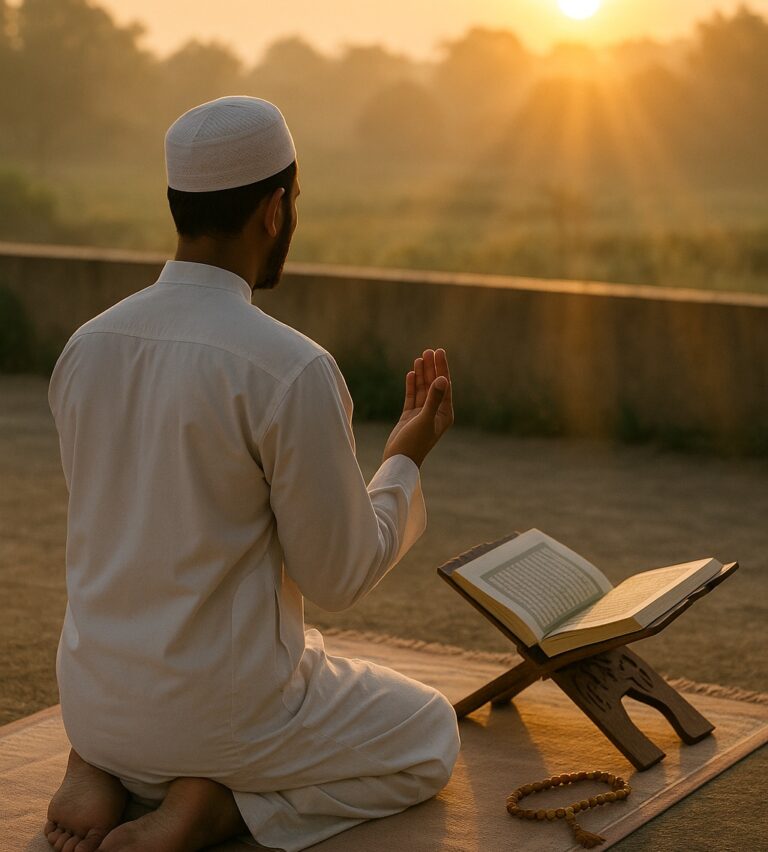
Islam encourages devotion, but never to the point of burnout. The Prophet Muhammad ﷺ taught his companions — and us — the importance of spiritual balance, reminding us that moderation sustains sincerity over the long term.
“Do good deeds properly, sincerely and moderately… Always adopt a middle, moderate, regular course, whereby you will reach your target (of Paradise).”
— Prophet Muhammad ﷺ (Sahih Bukhari)
This hadith is a profound reminder that our acts of worship are not meant to overwhelm us, but to nourish our souls consistently. Islam is not a religion of extremes, but of balance — between the dunya and the akhirah, effort and rest, action and intention.
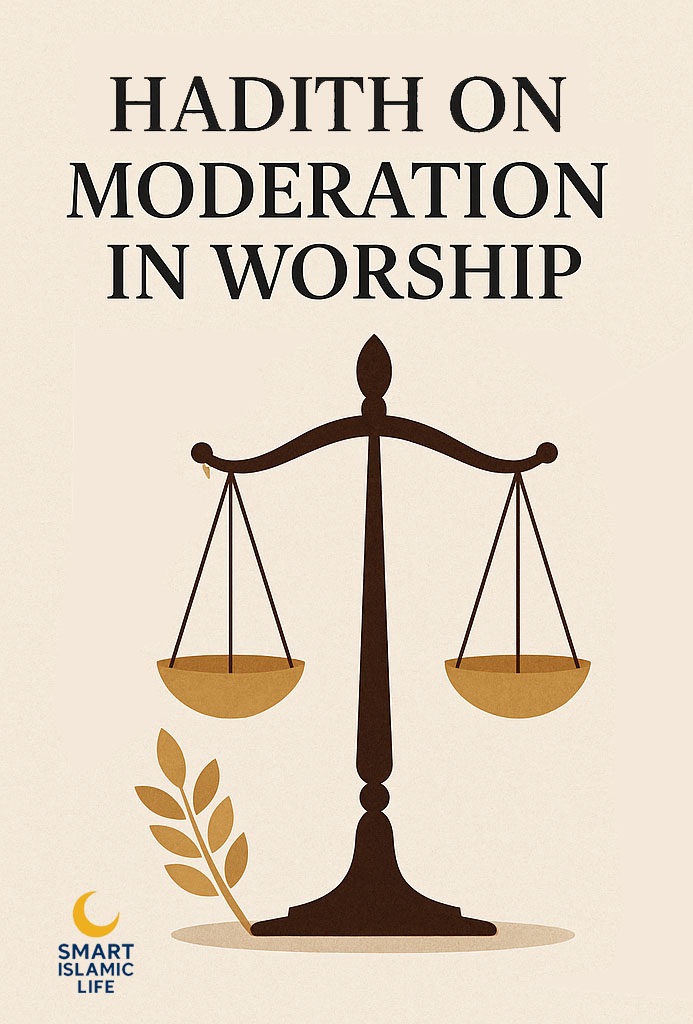
Why Extremes Fail Where Moderation Succeeds
There’s a well-known episode where a group of companions, eager to worship as intensely as possible, each vowed to take on something extreme — one to fast every day without exception, one to pray through every night without sleeping, one to never marry. When the Prophet ﷺ heard of it, he corrected them directly, reminding them that he himself fasted and broke his fast, prayed and slept, and married — and that whoever turned away from his example wasn’t following his way. The lesson wasn’t that intensity is wrong, but that a pace no one can sustain isn’t devotion — it’s a burst that burns out, often followed by guilt and complete abandonment rather than steady practice.
A Sunnah to Reflect On
The Prophet ﷺ himself paced his nights in worship, fasted regularly but not excessively, and taught his companions not to neglect their families or bodies in pursuit of spiritual goals. Moderation here isn’t a compromise or a lesser standard — it’s what makes worship survivable across an entire lifetime rather than just an intense season followed by burnout.
Let us follow this Prophetic model: do good regularly, even if small. What is done with intention, sincerity, and consistency is beloved to Allah ﷻ — more so, in many hadith, than a large deed done once and never repeated. If you’re working on building that kind of sustainable, moderate consistency into your daily worship, our Prayer Tracker is built around exactly this principle — small, repeated, trackable habits rather than unsustainable spikes of effort. Our Islamic Time Management guide covers the same idea applied more broadly across your day.