Hadith: The Reward of Waiting for Prayer
Narrated Abu Huraira:
Allah’s Messenger (ﷺ) said:
“لَا يَزَالُ أَحَدُكُمْ فِي صَلَاةٍ، مَا دَامَتِ الصَّلَاةُ تَحْبِسُهُ، لَا يَمْنَعُهُ أَنْ يَنْقَلِبَ إِلَى أَهْلِهِ إِلَّا الصَّلَاةُ”
“A person continues to be considered in prayer as long as he is detained by the prayer, and nothing prevents him from returning to his family except the prayer.”
(Sahih al-Bukhari, Sahih Muslim)
The Spiritual Value of Waiting for Prayer
In our fast-paced modern world, waiting is often viewed as lost time or an unwanted delay. However, within Islamic devotion, waiting for prayer—particularly inside the mosque—is elevated to a profound act of continuous worship. The Prophet Muhammad ﷺ revealed that as long as a believer sets aside worldly tasks and sits waiting for the congregation, Allah rewards every single
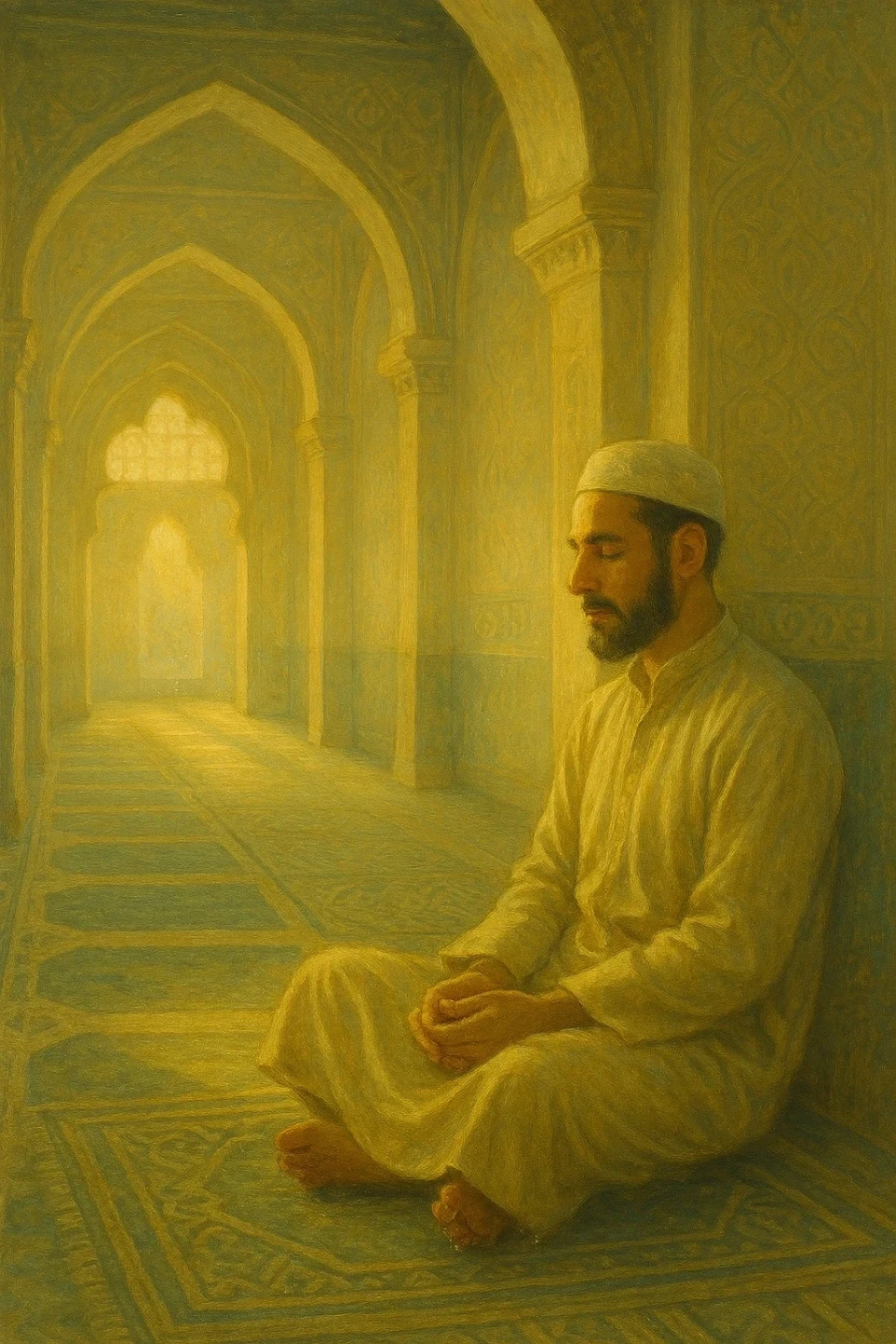
minute as if the individual were actively performing Salah. This divine courtesy highlights the value of detachment from worldly preoccupations in favor of spiritual presence, reinforcing the importance of maintaining pure routines such as staying in a state of physical purity through cleanliness in Islam.
Scholarly Context and Spiritual Benefits
Scholars of Hadith emphasize that this narration carries deep practical and spiritual implications for the daily life of a believer:
- Continuous Multiplication of Rewards: While waiting in the mosque, a person receives the spiritual rewards of Salah without physical exertion, simply by virtue of their sincere intention (Niyyah) and patience.
- Supplication of the Angels: Related authentic narrations mention that as long as a person remains sitting in their place of prayer in a state of purity (Wudu), the angels actively invoke blessings upon them, saying: “O Allah, forgive him! O Allah, have mercy on him!”
- Guardianship of the Mind: Arriving early for prayer provides a buffer zone between the noise of daily life and standing before Allah. It allows the heart to settle, fostering true concentration and humility (Khushu’) during prayer.
Connecting Heart and Routine to the Mosque
Attaching one’s heart to the mosque is among the qualities of those promised divine shade on the Day of Judgment. Making a conscious effort to arrive a few minutes before the Adhan or staying briefly after the prayer turns routine waiting time into a sanctuary for Dhikr (remembrance), Qur’an recitation, and personal supplication. For believers striving to build consistency in their daily worship, pairing early attendance with tools like a Prayer Tracker can help establish a meaningful, structured routine around the house of Allah.
Lessons for Modern Believers
This Hadith teaches that Islam values the intention and orientation of the heart just as much as outward physical deeds. When your primary motive for remaining in the mosque is devotion—delaying return to family or work simply to fulfill the next obligation—Allah writes that entire duration as active prayer. It encourages us to treat the mosque not as a place for quick drop-ins, but as an anchor for our daily schedule and spiritual health.
“The mosques of Allah are only to be maintained by those who believe in Allah and the Last Day and establish prayer…”
(Qur’an 9:18)