Cleanliness in Islam – Purity of Body and Soul Through Faith
Cleanliness holds a special place in Islam. It is not just about physical hygiene, but a reflection of one’s faith, discipline, and spiritual state. The Prophet Muhammad ﷺ taught that purity is half of faith, highlighting its importance in every Muslim’s life.
The Messenger of Allah ﷺ said: “Purity is half of faith.”
(Sahih Muslim)
Why “Half of Faith”?
It’s worth pausing on the specific proportion here — not a minor virtue, not a recommended habit, but half of faith itself. That framing puts purity on equal footing with belief, worship, and character, rather than treating it as a hygiene footnote attached to religion. The reason becomes clearer once you notice how consistently cleanliness threads through Islamic practice: it’s a prerequisite for prayer, a described love of Allah’s (“Allah is beautiful and loves beauty”), and a recurring theme in how the Prophet ﷺ conducted himself daily. Being clean in body, clothes, and environment is a direct expression of devotion — when a believer maintains purity, it reflects inner discipline and respect for divine guidance, not just concern for appearance.
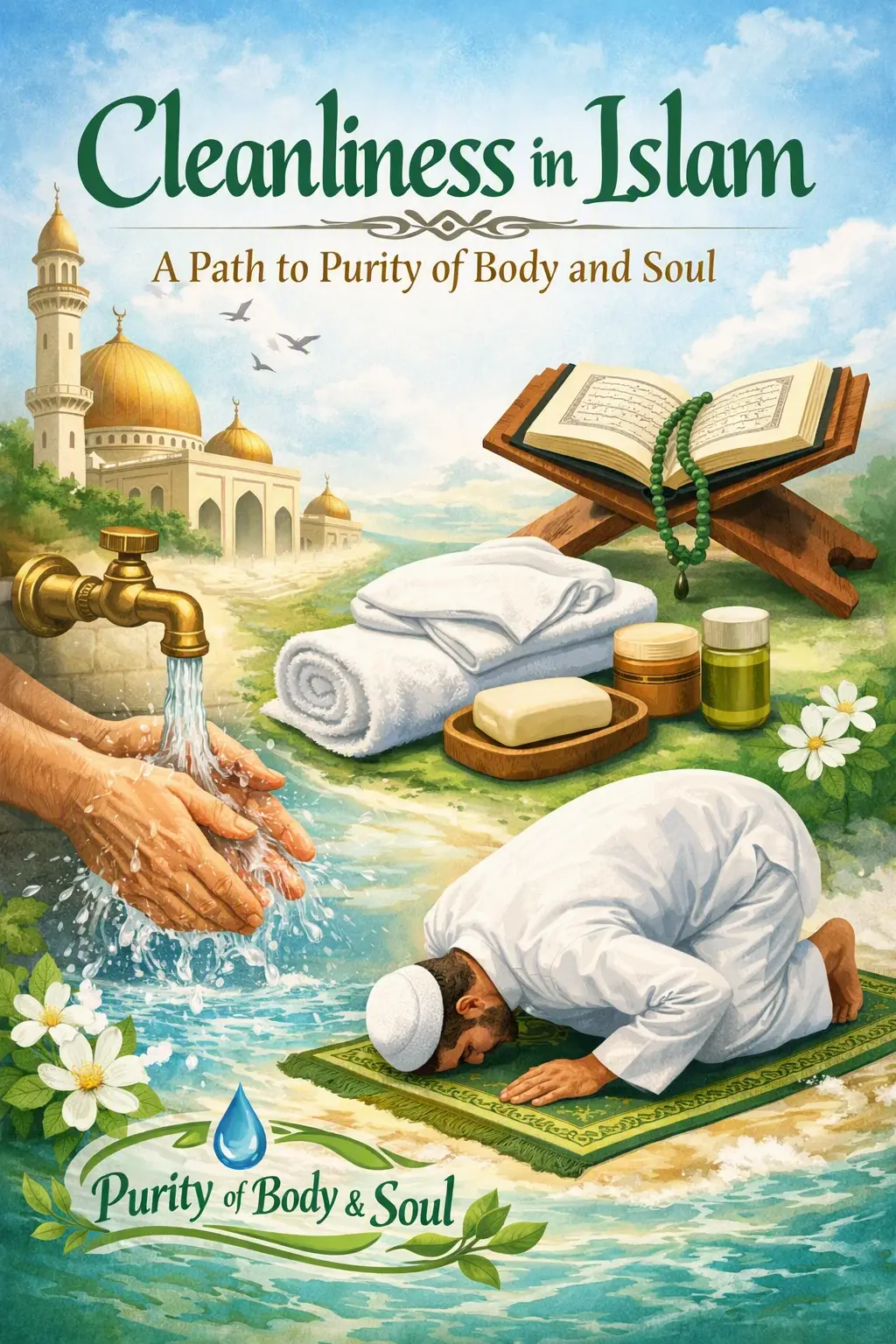
Daily Acts of Cleanliness in Islam
- Wudu (Ablution): Before every prayer, Muslims wash their hands, mouth, nose, face, arms, head, and feet, ensuring physical and spiritual readiness. Because this repeats five times a day, it’s one of the most consistent acts of purification in a Muslim’s routine — our Prayer Tracker can help you keep both prayer and the wudu that precedes it consistent.
- Ghusl (Full Bath): Required after major impurities, and specifically before Jumu’ah prayer — we cover the reasoning and etiquette behind this in The Sunnah of Friday Bath.
- Miswak / Toothbrush: The Prophet ﷺ valued oral hygiene highly and encouraged the regular use of miswak, describing it as pleasing to Allah and purifying for the mouth.
- Clothing & Surroundings: Islam encourages wearing clean clothes, especially during Salah, and keeping homes, mosques, and public spaces tidy — cleanliness extended outward, not just kept to oneself.
Cleanliness of the Heart and Soul
Beyond physical hygiene, Islam places equal weight on inner cleanliness — arguably the harder half of the equation, since it can’t be washed away in a few minutes the way physical impurity can:
- Removing envy, hatred, and arrogance from the heart.
- Practicing honesty, kindness, and sincerity in daily dealings.
- Purifying intentions so that deeds are done for Allah alone, not for recognition or habit.
This is where the “half of faith” framing makes the most sense — a person can be scrupulously clean physically while carrying real spiritual impurity, and Islam treats that as an incomplete picture. Both halves are asked for together.
Environmental Cleanliness
The Prophet ﷺ warned against polluting public places, water sources, or roads. Caring for the environment is part of a Muslim’s responsibility, since the Earth is treated as a trust (Amanah) from Allah rather than something to use without regard for what’s left behind for others. This extends the concept of purity beyond the personal — cleanliness isn’t only about how a believer presents themselves, but how they leave shared spaces for everyone else who uses them after.
Conclusion
Cleanliness in Islam is a holistic concept — it covers the body, clothing, surroundings, and the heart, all treated as connected rather than separate obligations. By maintaining purity in each of these areas, Muslims not only improve their health and environment but strengthen their connection with Allah.
“Indeed, Allah is beautiful and loves beauty.” (Sahih Muslim)