The Islamic Guide to Emotional Self‑Care
Ayah:
“Verily, in the remembrance of Allah do hearts find rest.”
— Qur’an 13:28
What Islamic Emotional Self Care Really Means
Emotional self care in Islam is not about escaping stress — it is about strengthening the heart so it can face life with sabr, tawakkul, and clarity. Islam teaches that the qalb (heart) is the center of your spiritual and emotional wellbeing. When the heart is healthy, your thoughts, feelings, and actions become healthy too.
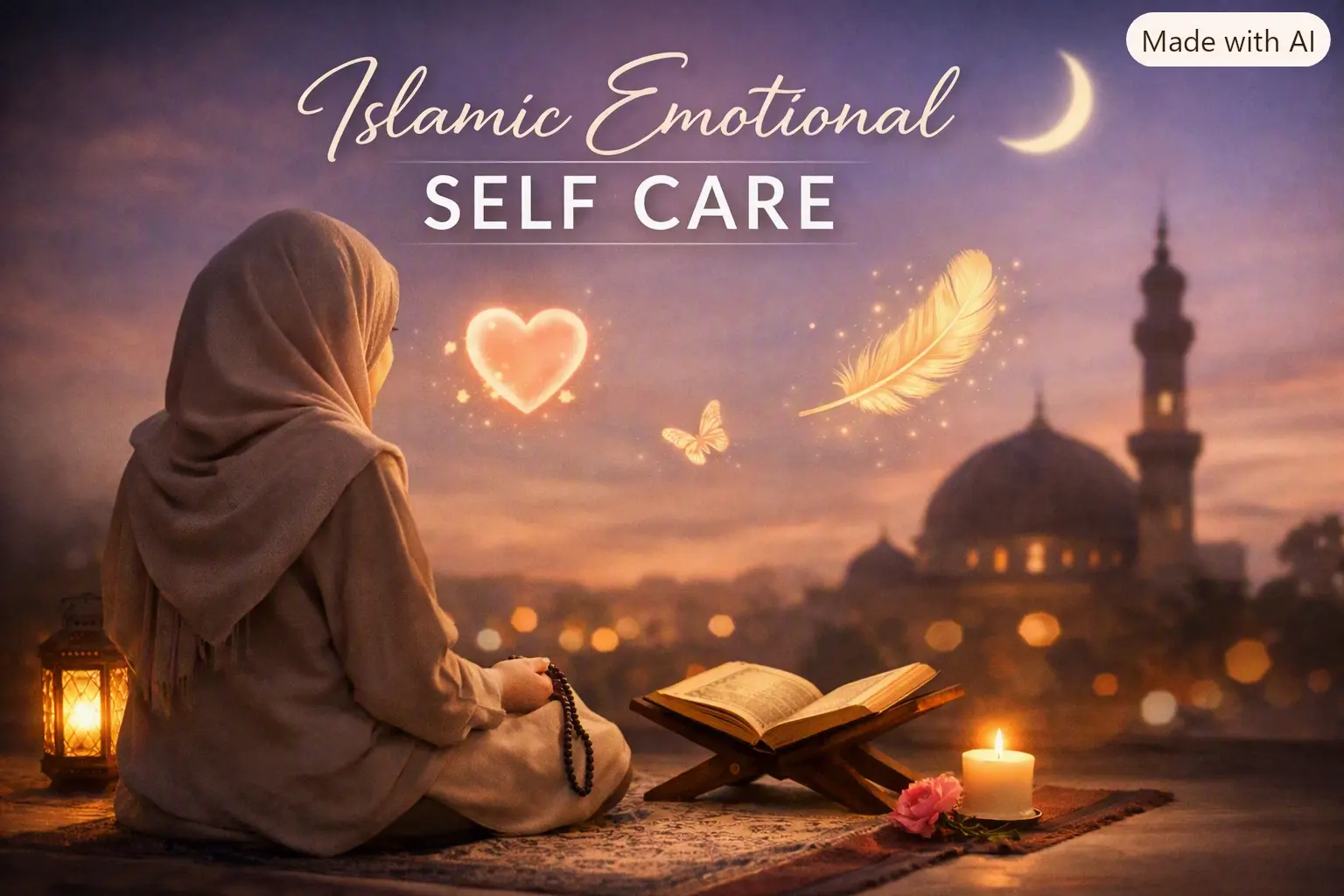
Most people try to “manage stress” by distraction. Islam teaches the opposite: strengthen the heart so stress loses its power.
Why Muslims Need Emotional Self Care Today
Modern life brings constant pressure — work, family, social media, financial stress, and emotional overload. Many Muslims feel spiritually connected but emotionally drained.
Islamic emotional self care helps you:
- Reduce stress and anxiety
- Strengthen your relationship with Allah
- Improve patience and emotional stability
- Build healthier relationships
- Feel more grounded and peaceful
This is not luxury — it is a Sunnah‑based necessity.
Core Pillars of Islamic Emotional Self Care
1. Dhikr for Emotional Stability
Dhikr calms the nervous system, reduces anxiety, and brings clarity. Even two minutes can reset your emotional state.
Simple daily dhikr:
- SubhanAllah
- Alhamdulillah
- Allahu Akbar
- La ilaha illallah
You can also use our Duas Library to explore more forms of remembrance.
2. Dua for Emotional Healing
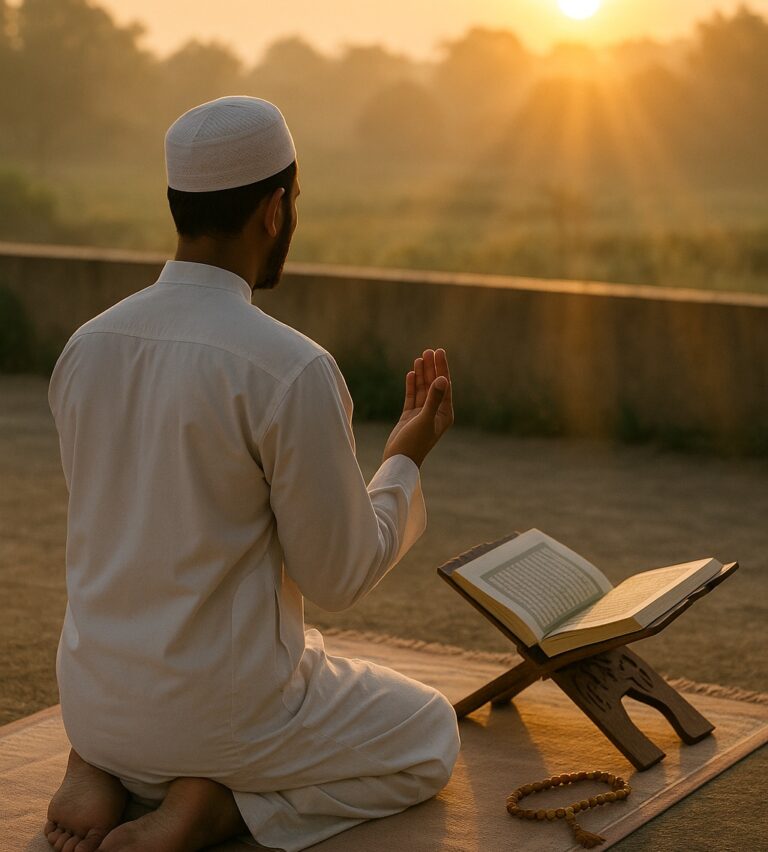
The Prophet ﷺ taught specific duas for sadness, stress, and fear.
“O Allah, I seek refuge in You from anxiety and sorrow…”
Dua is not only worship — it is emotional release. Explore more duas in our Ramadan Duas collection.
3. Qur’an Reflection (Tadabbur)
Reading Qur’an is healing, but reflecting on it is transformation.
Choose one ayah daily and ask:
- What is Allah teaching me?
- How can I apply this today?
For daily consistency, our Prayer Tracker helps build spiritual habits.
4. Sunnah Habits That Protect the Heart
Small Sunnah actions have big emotional impact:
- Sleeping early
- Saying Bismillah before tasks
- Smiling
- Avoiding arguments
- Giving small charity
Explore more Sunnah habits in our Daily Hadith & Sunnah section.
5. Healthy Boundaries (Islamic Perspective)
Islam encourages kindness — but not self‑destruction.
You can say:
- “I need time to rest.”
- “I cannot take this responsibility now.”
- “I prefer not to discuss this topic.”
Protecting your emotional space is part of wisdom (hikmah).
6. Gratitude Journaling
Writing three blessings daily increases emotional resilience.
“If you are grateful, I will increase you.” — Qur’an 14:7
Pair this with our Halal Budget Planner to track blessings in your financial life too.
7. Limiting Digital Noise
Scrolling drains emotional energy.
Islam teaches us to avoid useless talk, harmful environments, and protect our eyes and ears. Digital minimalism is a modern Sunnah.
Signs You Need Islamic Emotional Self Care
- You feel overwhelmed
- You lose patience easily
- You feel spiritually connected but emotionally tired
- You struggle with negative thoughts
- You feel pressure to “be strong” all the time
A Simple Islamic Emotional Self Care Routine
Daily (10 minutes)
- 2 minutes dhikr
- 1 ayah reflection
- 1 dua for emotional peace
- 3 gratitude points
Weekly
- Attend one prayer in the masjid
- Give small charity
- Digital detox for 1 hour
Monthly
- Review your emotional triggers
- Reset your goals with intention (niyyah)
The Prophetic Model of Emotional Strength
The Prophet ﷺ experienced grief, fear, loss, and stress — yet he remained emotionally balanced because he practiced:
- Deep connection with Allah
- Healthy boundaries
- Positive thinking
- Community support
- Regular worship
- Rest and silence
- Gratitude
Islamic emotional self care is simply following his example.
Key Takeaway
Islamic emotional self care is not about avoiding emotions — it is about guiding them with Qur’an, Sunnah, and a peaceful heart connected to Allah.