The Ultimate Guide to the Power of the Last Third of the Night
Hadith:
The Prophet (peace be upon him) said:
“Our Lord, the Blessed and Exalted, descends to the lowest heaven every night when the last third of the night remains and says: ‘Who would call upon Me that I might answer him? Who would ask of Me that I might give to him? Who would seek My forgiveness that I might forgive him?'”
— (Sahih Bukhari & Muslim)
A Time of Divine Mercy
This hadith describes something that isn’t a one-time historical event — it’s a standing invitation, repeated every single night, right now, tonight, whether or not anyone takes it up. In the last third of the night, Allah calls His servants directly, inviting them to ask, to seek forgiveness, and to be answered.
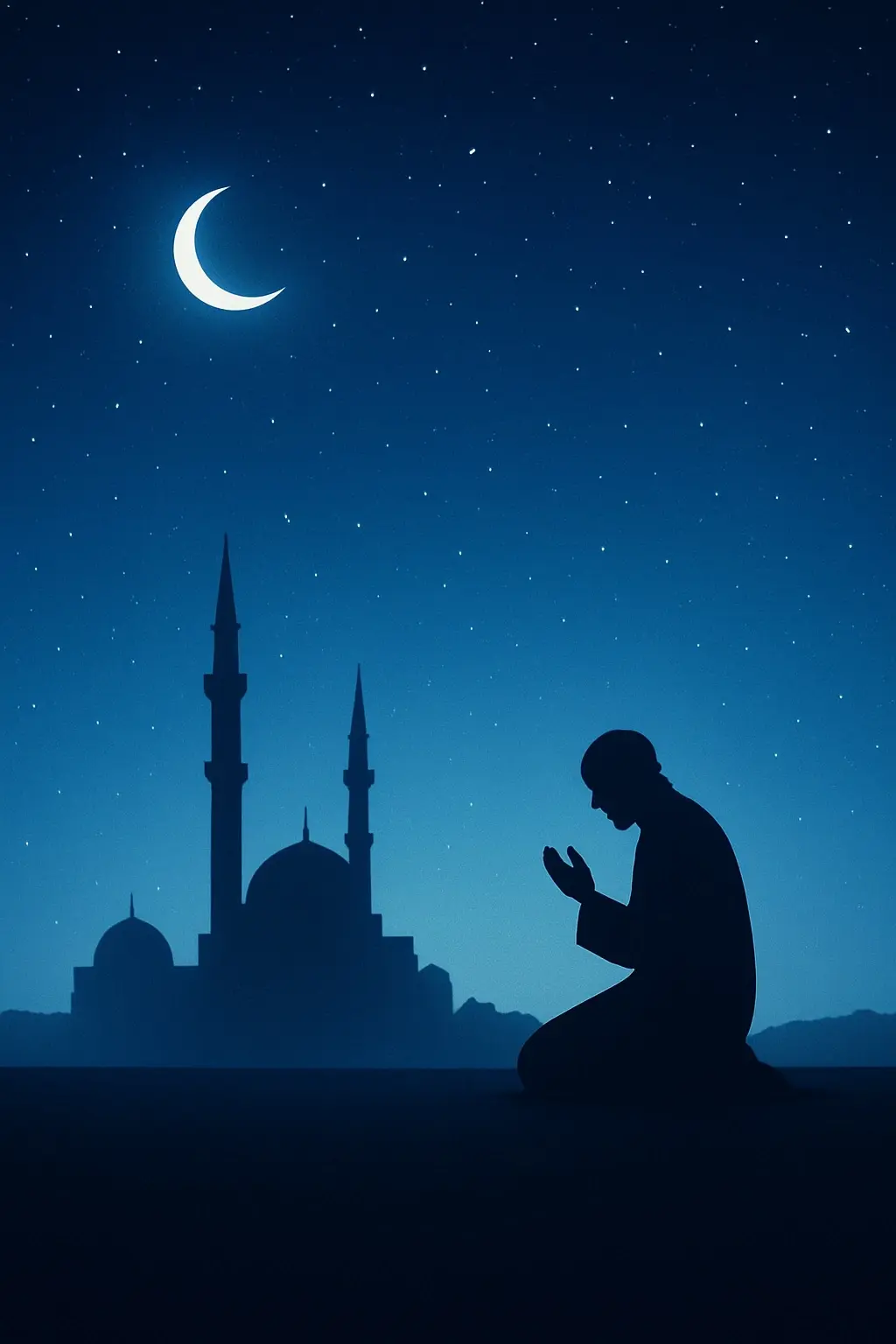
Most of what we know about drawing closer to Allah involves effort on our part to reach Him. This hadith describes the opposite: Allah reaching toward His servants first, while most of the world is asleep.
What Is the Last Third of the Night?
Practically, this window is calculated by dividing the time between Maghrib (sunset) and Fajr (dawn) into three equal parts — the final third being the one this hadith refers to. Because sunset and dawn shift throughout the year, this window moves with them; it isn’t a fixed clock time. Our Prayer Times Calculator can help you work out Maghrib and Fajr for your location, which makes it straightforward to estimate where the last third falls on any given night.
Why This Time Is So Special
- A direct call from Allah: Unlike any other time, Allah Himself calls His servants to turn to Him — the initiative comes from Him, not just from us.
- Dua is especially receptive: Supplications made in this hour are described as holding particular weight, in a period when sincerity tends to be highest and distraction lowest.
- Forgiveness is close at hand: Sins are wiped away for those who sincerely seek pardon in this window.
- A moment of quiet: The world is asleep, phones are off, and the heart tends toward a sincerity that’s harder to reach during the noise of the day.
How Believers Benefit From This Time
To make use of this window, the righteous have long made a habit of:
- Waking a little before Fajr for Tahajjud prayer.
- Spending a few moments in heartfelt dua.
- Seeking forgiveness through istighfar.
- Reflecting on life and renewing their intentions for the sake of Allah.
Even two units of prayer and a few sincere words can shift the course of a day — and over time, a life. If you want to build this into a consistent habit rather than an occasional effort, our Prayer Tracker can help you stay accountable to it night after night, the same way it’s easy to track the five obligatory prayers.
Reflection
The Lord of the worlds, who needs nothing from His servants, calls out to them every night: “Who would ask of Me? Who would seek My forgiveness?” It’s an open door of mercy — not a rare occurrence, not a one-time offer, but a nightly invitation that most people simply sleep through. The wise don’t wait for a special occasion to take it up; they treat an ordinary night, and the quiet hour before Fajr, as opportunity enough.