
Daily Hadith: The Reward of Feeding Others.
Hadith of the Day:
The Prophet Muhammad ﷺ said:
“He is not a believer whose stomach is filled while the neighbor to his side goes hungry.”
«مَا آمَنَ بي مَن باتَ شبعانَ، وجارُهُ جائعٌ إلى جنبِهِ، وهو يعلمُ بهِ»
(Sunan al-Kubrā 19049)
Why the Language Is So Strong
This hadith doesn’t say the well-fed neighbor is unkind, or has fallen short of an ideal. It says he is not a believer — a striking accusation to attach to something as ordinary as eating dinner while unaware, or worse, aware, that someone nearby has none. The condition specified matters too: “and he knows of it.” This isn’t a blanket condemnation of anyone who has ever eaten well while someone somewhere went hungry — it’s specifically about knowing hunger exists right beside you and remaining comfortable anyway. Knowledge plus indifference is what the hadith targets, not simply having more than someone else.
A Sunnah of Compassion
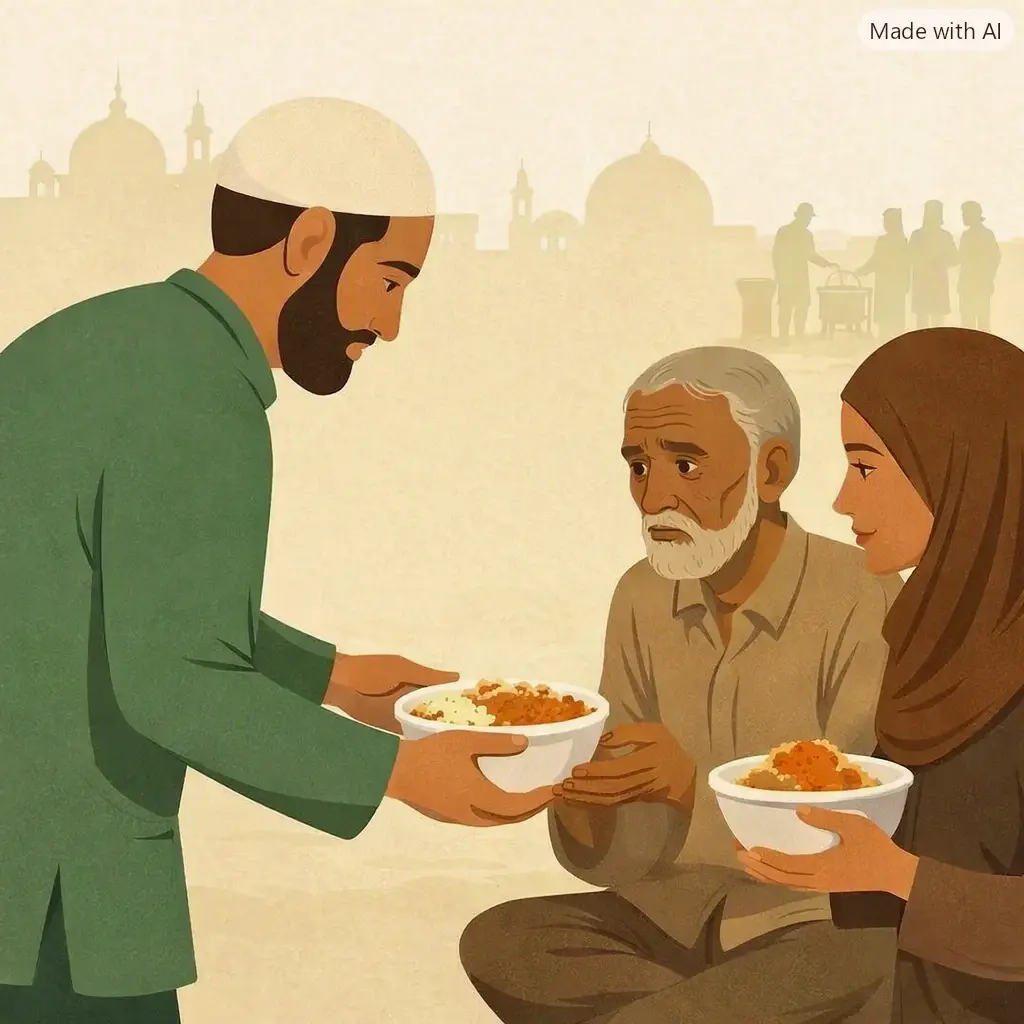
Feeding others is a noble act rooted in both mercy and community care. Whether it’s offering a meal to a guest, feeding the poor, or simply sharing food with neighbors, this simple Sunnah builds hearts, not just homes. The Prophet ﷺ regularly shared his food, even when he had little himself — this wasn’t charity given from surplus, but generosity practiced as a habit regardless of how much or little he had. He taught that feeding others is a gateway to Paradise and a means of earning immense reward from Allah ﷻ.
Why “Neighbor” Specifically
The hadith could have spoken generally about “the poor” or “the needy” — instead it names the neighbor, the person physically closest to you, whose situation is hardest to plead ignorance about. Distant suffering is easy to acknowledge in the abstract and just as easy to not act on; a neighbor’s hunger is a different kind of knowledge, immediate and specific. This hadith closes the gap between “caring about poverty” as a general value and actually noticing and responding to the person next door.
Daily Practice Tip
Next time you prepare a meal, set aside a portion to give away — to a neighbor, a worker, or someone in need. Even a single date, a piece of bread, or a drink of water carries reward if done sincerely. This doesn’t require waiting for a special occasion or a large surplus; the hadith’s standard is awareness and willingness, not abundance. And once food is shared, how it’s eaten matters too — see our post on the blessing of eating together for the Sunnah of sharing a meal itself, not just providing one.
Reflection
This hadith invites us to think beyond our own plates. In a world where abundance and scarcity often exist side by side — sometimes on the very same street — being mindful of others isn’t just kindness; it’s treated here as a direct reflection of the strength of one’s faith.