Halal Money Matters: Building Wealth the Sunnah Way
In a world driven by consumerism and debt, Muslims often wonder:
Can I manage money wisely and still stay true to my faith?
The answer is: Absolutely.
Welcome to Halal Finance — where every dirham counts, and every transaction matters in the eyes of Allah ﷻ.
What Is Halal Finance?
Halal finance refers to managing money in ways that are permissible (halal) under Islamic law (Shariah). This means:
- No interest (riba) — money isn’t allowed to generate more money simply by sitting lent out; wealth is meant to grow through real trade, effort, or risk genuinely shared between parties.
- No speculation or gambling (gharar/maysir) — excessive uncertainty in a transaction, or outcomes based purely on chance, are avoided in favor of clear, mutually understood exchanges.
- No funding haram businesses (like alcohol, tobacco, or adult content), regardless of how profitable the return might look on paper.
Instead, Islam encourages ethical investing, trade, partnerships, and responsible spending — profit earned through genuine value creation and shared risk, not through interest or exploitation.

Financial Sunnahs You Can Start Today
- Earn with honesty.
The Prophet ﷺ said: “The honest and trustworthy merchant will be with the Prophets, the truthful, and the martyrs.” (Tirmidhi) — a strikingly high status for something as ordinary as fair dealing in trade. Honesty in speech generally is a related theme we cover in our post on the warning against false testimony. - Avoid debt.
The Prophet ﷺ would seek refuge from debt regularly, even as the leader of a growing community with access to real resources. It weighs heavy not just in life, but also in the Hereafter — a reminder that avoiding debt isn’t just prudent money management, it’s treated as a spiritual concern in its own right. - Spend on family first.
Charity begins at home. Provide for your dependents before others. It’s a form of ibadah (worship), not a lesser priority compared to charity given outward. - Give zakat & sadaqah generously.
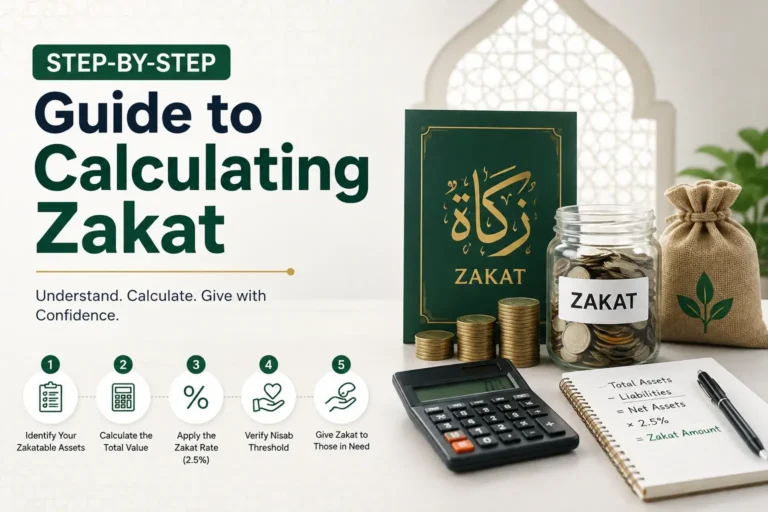
Giving purifies wealth. Zakat isn’t a tax — it’s a divine purifier, obligatory and calculated, distinct from the voluntary generosity of sadaqah. - Don’t delay paying dues.
“Delaying payment by a wealthy person is injustice.” (Bukhari) — a direct statement that financial carelessness toward someone owed money isn’t a minor inconvenience, but injustice in plain terms.
How to Live a Barakah-Focused Financial Life
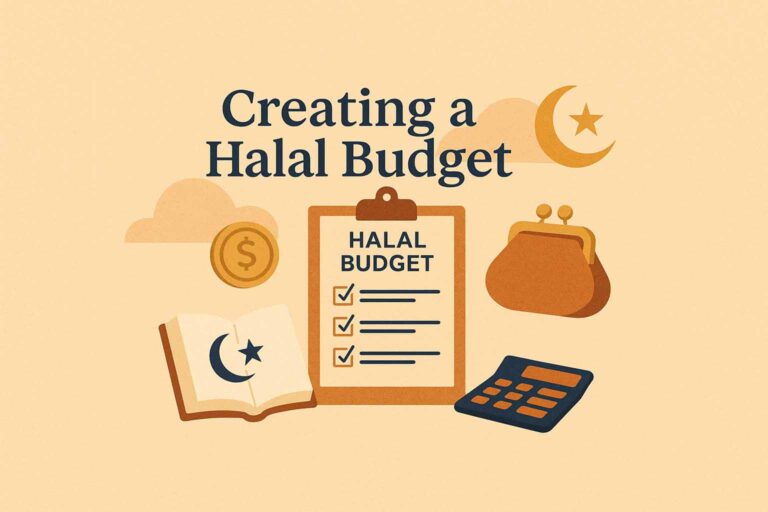
- Create a halal budget, built around these principles rather than adjusted after the fact.
- Choose Islamic banking or credit-free alternatives wherever genuinely available to you.
- Track your zakat annually using our Zakat Tracker, so it isn’t a rushed calculation once a year.
- Save for the Akhirah, not just dunya — treating charity and good deeds as part of your actual financial planning, not an afterthought to it.
- Keep a money + du’a journal to stay intentional about both what you earn and how you ask Allah to bless it.
Recommended Tools
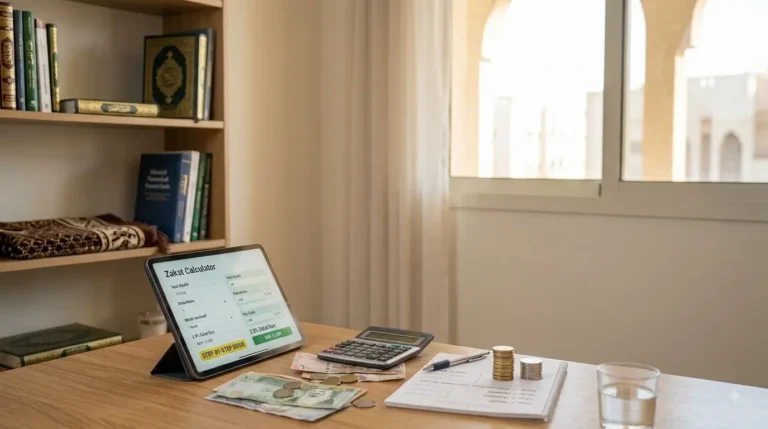
- Zakat Calculator — work out exactly what you owe, rather than estimating.
- Zakat Tracker — keep a running record across the year instead of reconstructing it from memory each Ramadan.
Final Reflection
Halal finance isn’t about restrictions.
It’s about building a life where money becomes a means to Jannah, not a distraction from it.
Start your journey to barakah-rich wealth — one halal step at a time.